Educational Program
The Amazon is beautiful!
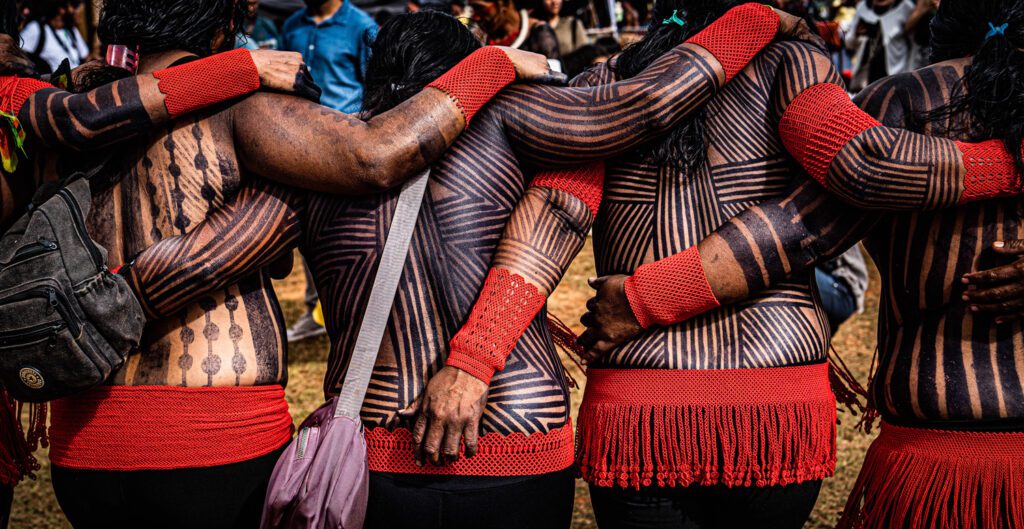
The "Amazonia sua Linda" Program brings together all the educational projects of the Dom Phillips Institute. Our focus is to equip indigenous youth with the tools and knowledge they deem necessary to enhance their collective struggles for rights, ways of life, and territories, and consequently, to promote the protection of the forest, since Indigenous Lands are the most protected areas in the Amazon region and store a large amount of carbon, contributing to the planet's climate balance.
“Amazon, you are beautiful” were Dom Phillips’ last public words on a social network, and now they give our pedagogical mission its name.
Project
Management mentoring
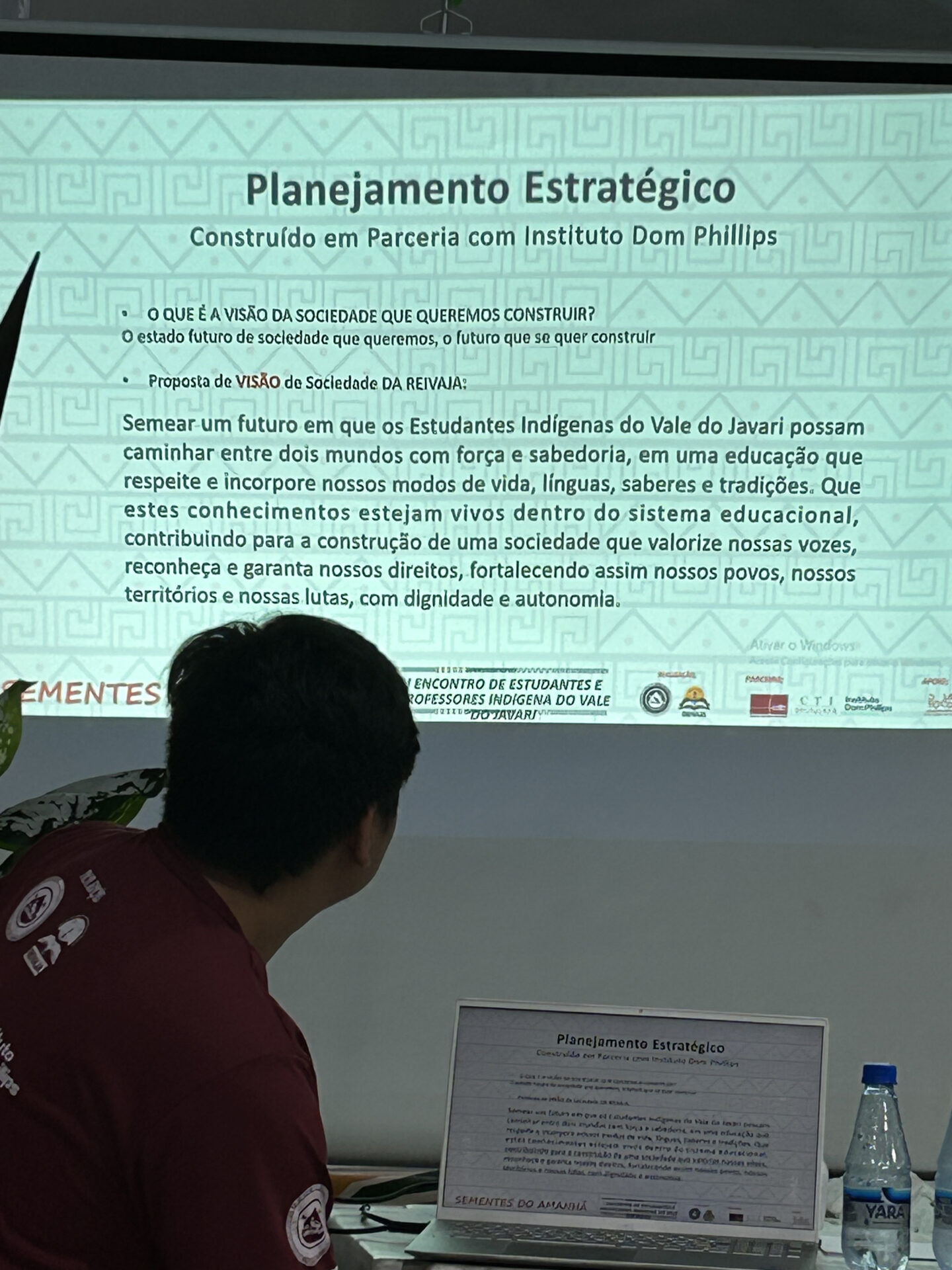
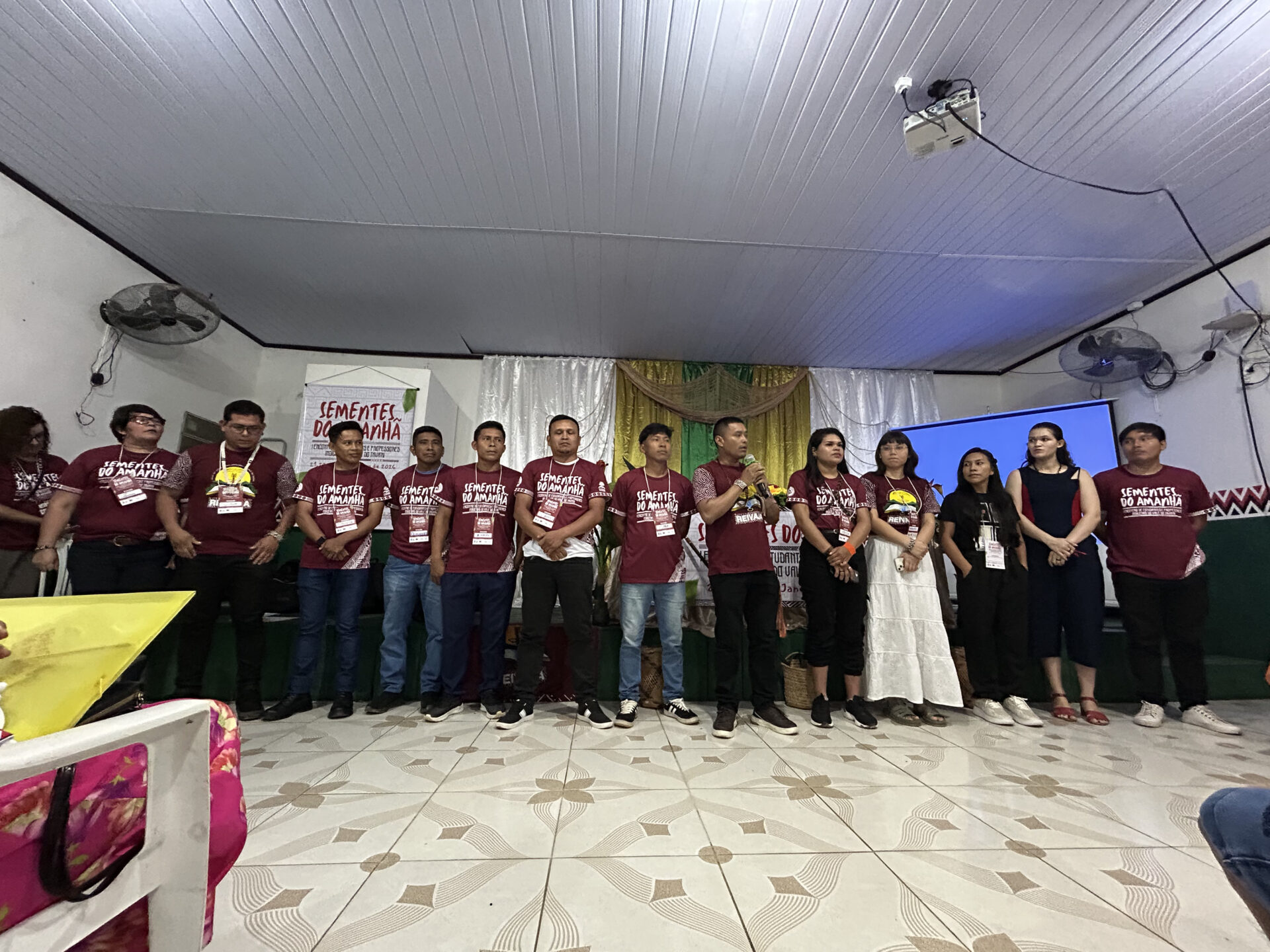
Carried out in partnership with the Indigenous Student Network of the Javari Valley (REIVAJA), this project aims to support the structuring and institutional development of the Collective formed by 65 indigenous university students from the Javari Valley, through mentoring in strategic management areas: Planning, Governance, Communication, Project Development and Fundraising, promoting mutual learning and the collective construction of management tools, and expanding the capacity for organization and networking.
Methodology
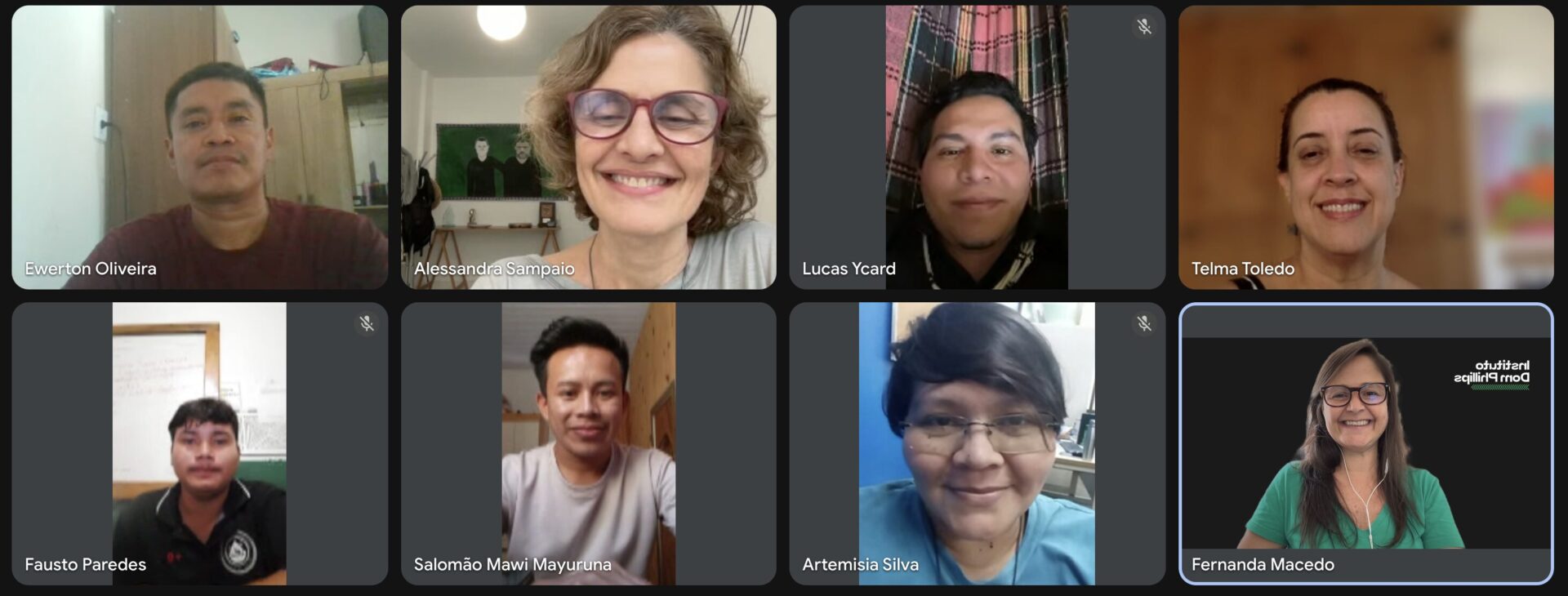
The training process is built collectively with the young people and takes place in weekly 2-hour meetings. The work seeks to respond to practical situations in the daily life of a group, thus ensuring that the learning process is effective, practical, affective, and respects the diverse pace, cultures, and knowledge brought by the participants.
Results and impacts
The mentorship program yielded concrete achievements. In 2025, during these meetings, we collectively built and approved the Strategic Plan and bylaws of REIVAJA, held elections to form the Councils and Coordination of the collective, and developed the project applied to the call for proposals for the INDIGENOUS SCIENCES AWARD – “Ancestral solutions for the climate, for the Amazon and for all lives”, from the Podaàli Fund, which was successful. Following the awarding of this prize, we jointly planned and produced the event "Seeds of Tomorrow – First Meeting of Indigenous Students and Teachers of the Javari Valley," which took place in January 2026 in Atalaia do Norte, Amazonas, and was attended by more than 150 people each day over the three days. Representatives from indigenous organizations, indigenists, universities, education departments, and others participated, and discussions focused on indigenous school education, access to and retention of indigenous students in universities, and climate education, including dialogues on the importance of Indigenous Lands in protecting the Amazon and on climate change and its social, economic, environmental, and health impacts already felt in the region.
Project
training in rights, environment and territory
The project aims to assist in the educational process of young Amazonian indigenous people, promoting meetings where topics related to Indigenous Rights, the Environment, and Territories are presented, discussed, and addressed in a way that complements and enhances their knowledge on issues that are important to them and that support their fight for their rights.
Methodology
The learning process is guided by listening and horizontal dialogue. The methodology is based on monthly virtual meetings, lasting two hours, where the topics chosen by the young people are presented from a basic theoretical framework, and spaces are opened for participants to share their experiences, ask questions, and reflect on the practical application of the concepts in their lives and communities.
Results and impacts
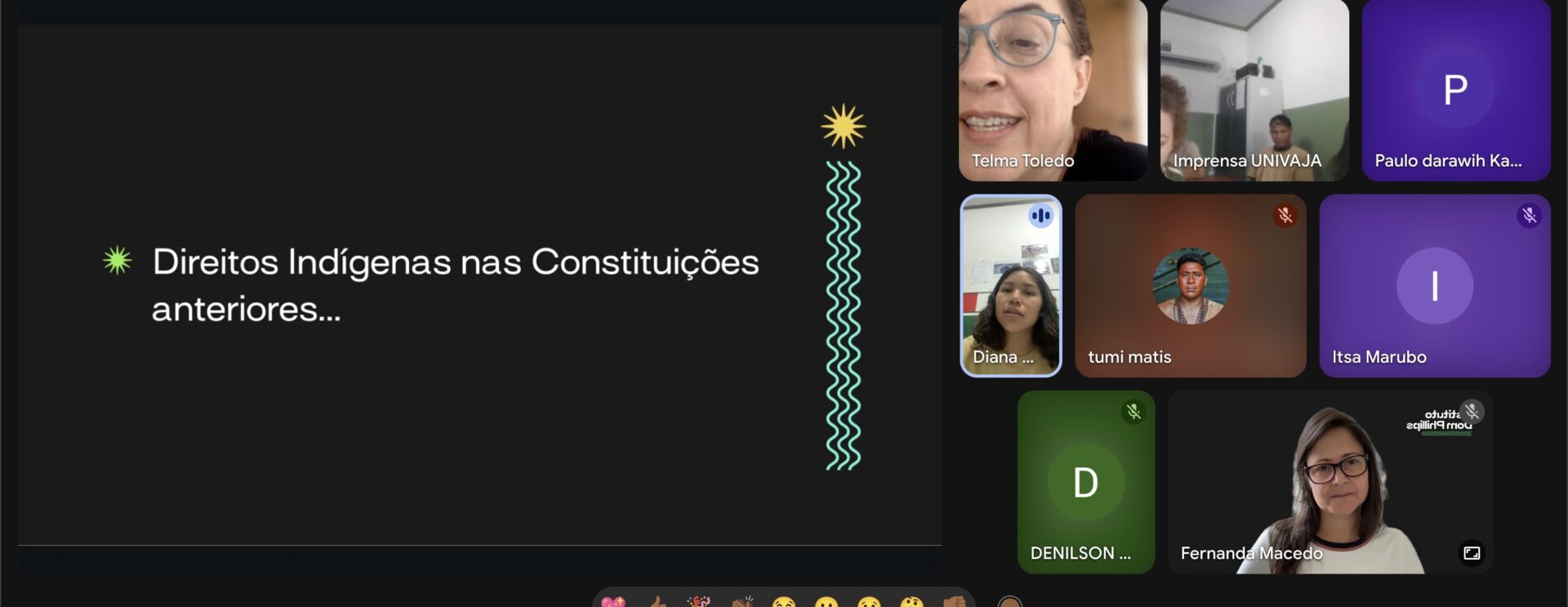
In 2025, this project was carried out in partnership with the Union of Indigenous Peoples of the Javari Valley (UNIVAJA), and aimed to contribute to the training of 14 young indigenous communicators who were part of the Voices of the Javari Project. There were 8 monthly meetings where the topics, chosen by them from among the 3 axes of the project, were: Indigenous Constitutional Rights, Climate Change, the COP and the Importance of Indigenous Lands in protecting the forest and climate balance, FUNAI, its history and current functioning, the so-called Devastation Bill and its probable impacts on Indigenous Lands and the destruction of the Amazon.
The objective was to complement the technical audiovisual training offered by the UNIVAJA communication team, equipping young people with the necessary knowledge so that their narratives could be transformed into powerful tools for territorial and cultural defense.
The project contributes to strengthening the work of the Vozes do Javari collective, improving the use of communication as an instrument of political advocacy. By combining audiovisual techniques with expertise in topics such as rights and the environment, the following impacts are achieved:
- Improved Debate Quality: Young people became better prepared to discuss climate crises and human rights violations in national and international forums.
- Narrative Security: Stronger theoretical foundation for the production of content that denounces threats to the territory.
- Empowerment: Strengthening the new generation of leaders at the forefront of Indigenous communication in the Javari Valley.